
- Sailing Croatia tips
-
by Ultra Sailing Team
Northern Croatia sailing at the start of the season offers something that is hard to find in peak summer. Space, silence, and a stronger connection with the sea. In March 2026, our skipper and sailing instructor Toni Busic set out from our charter base in Pomer on our Beneteau Oceanis 40.1 “Kobe” with a clear goal. Explore the northern Adriatic and Kvarner area through less commercialized islands, quiet anchorages, and bays where nature still dominates.
Our charter base Pula is located in ACI Marina Pomer, on the north-west side of Medulinski zaljev. It is a perfect starting point for sailing in Istria or the northern Adriatic part. The marina offers 294 sea berths and around 30 dry berths ashore. It is a well-protected and practical starting point for any northern Croatia sailing route.
This route is ideal for sailors looking for authentic experiences, reliable anchorages, and uncrowded bays. It is especially suitable in pre-season when conditions reward those who prioritize sailing itself over nightlife and busy marinas.
Table of contents: Northern Croatia sailing
Northern Croatia sailing route overview
- Duration: 5 days
- Total distance: ~110 NM
- Best period: April to May and October
- Skill level: Intermediate (basic anchoring and route planning required)
- Key advantage: High availability of anchorages and mooring buoys outside peak season
Day 1: Sailing from Pomer to Unije
The journey begins with a 25 nautical mile passage from Pomer towards the island of Unije, located west of the northern part of Lošinj and separated by the Unije Channel. With around 5.5 hours of sailing, this leg sets the tone for northern Croatia sailing. Open sea, steady winds, and a gradual transition into a quieter island landscape.
Unije is known for its simplicity and isolation. The only settlement, the village of Unije, lies on the western side overlooking Luka Unije. Unlike many Adriatic islands, Unije has no major tourist infrastructure, which adds to its raw charm. Historically, the island relied on agriculture and fishing, and even today it retains a strong sense of detachment from mass tourism.
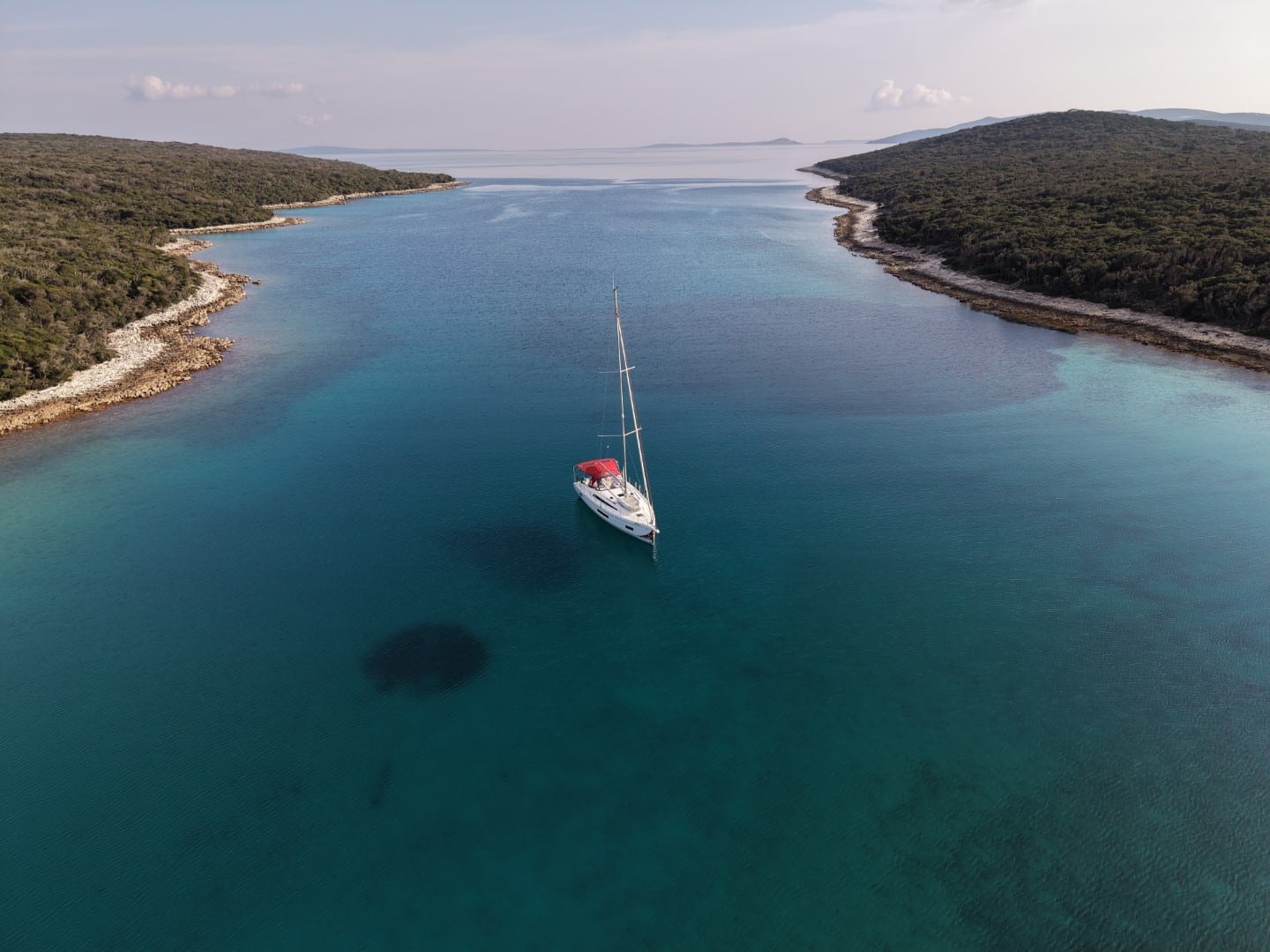
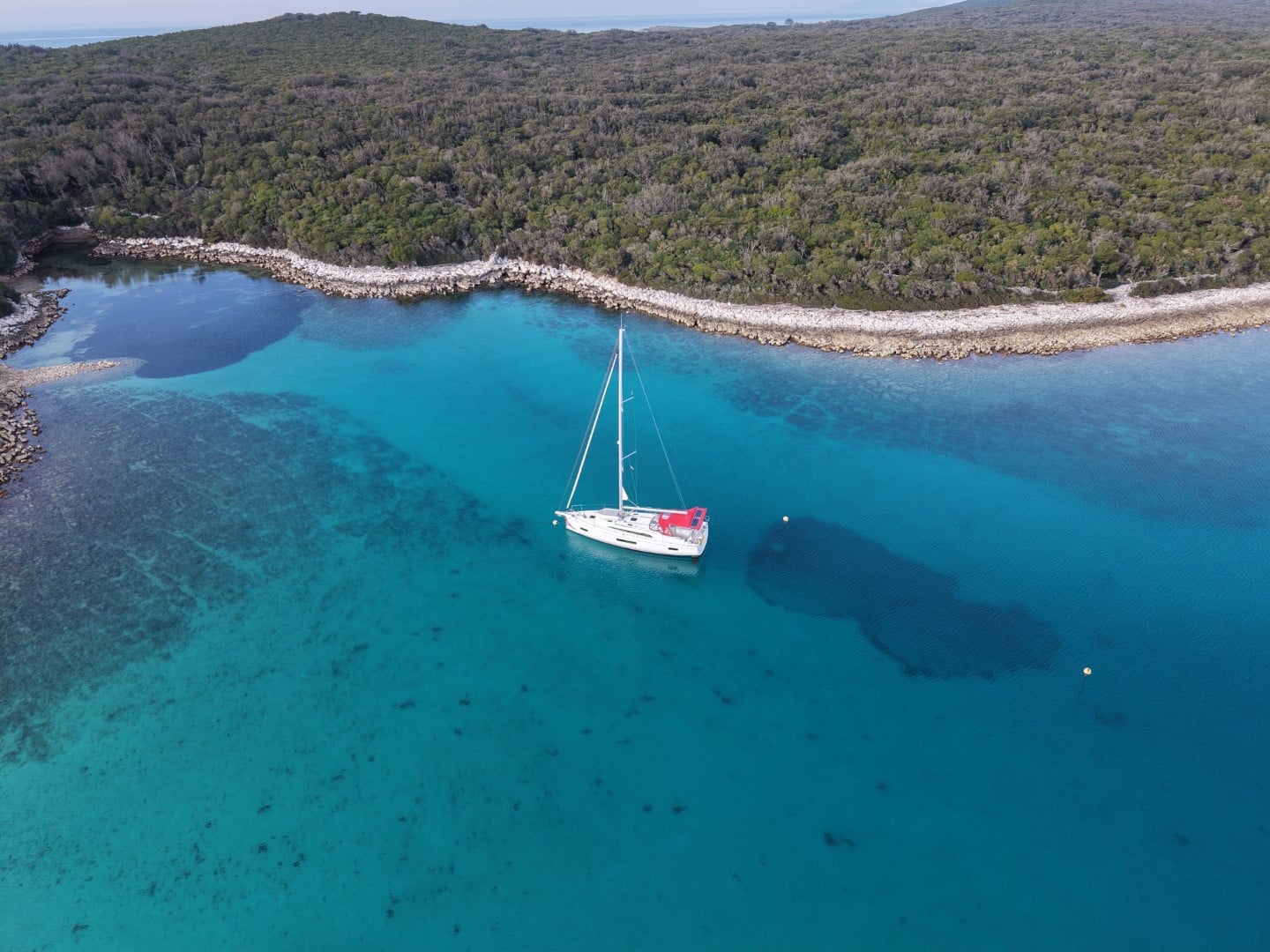
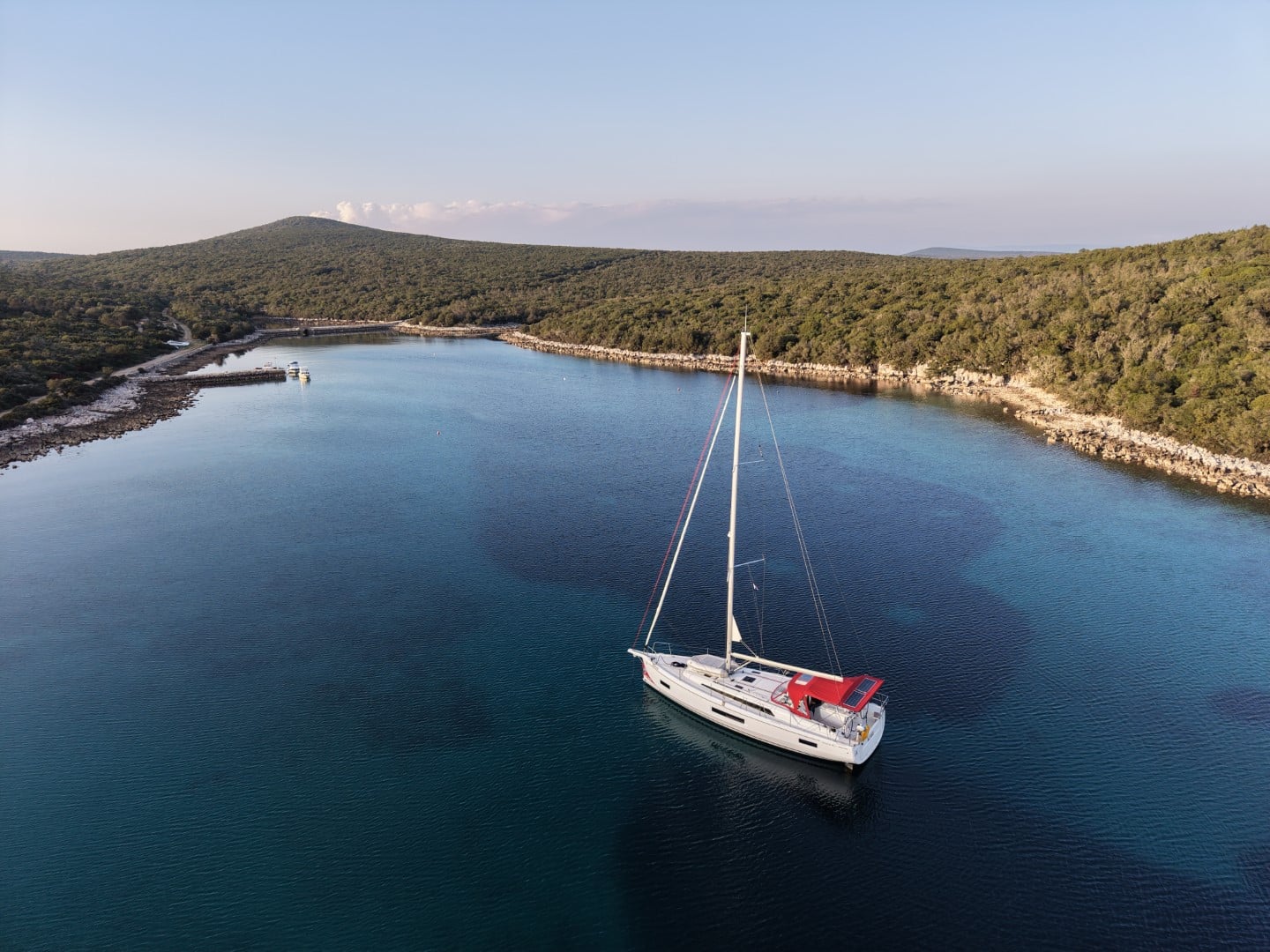
On the eastern coast, three distinct bays offer excellent shelter and anchoring options.
- Maračol Bay is the most protected and the most equipped. Around 50 mooring buoys are available, and the holding on sand is reliable at depths of 5 to 9 meters. A boatman typically handles mooring fees and waste collection.
- Podkujni Bay offers a quieter alternative with around 25 buoys, suitable for those seeking more space.
- Vognišća Bay remains the most untouched, with no buoys and fewer visitors. It is ideal for pure anchoring and a more remote experience.
Toni chose a buoy in Podkujni bay for the night. In April or even May, availability is high, and even a late afternoon arrival would not have been an issue. This is exactly where pre-season sailing in the northern Adriatic shows its advantage.
Day 2: Unije to Mali Lošinj and Škarda Island
The short 12 NM leg to Mali Lošinj serves a clear operational purpose. Refuelling, provisioning, and resetting before continuing into less serviced areas.
Beyond its practical value, Mali Lošinj also offers cultural depth. The Museum of Apoxyomenos is a highlight. It houses a remarkable ancient Greek bronze statue discovered in 1996 near the island. The museum experience is immersive, leading visitors through a carefully designed narrative before revealing the statue itself in a minimalistic white chamber.
After resupplying, the route continues 26 NM towards the island of Škarda. This small and sparsely populated island lies between Ist and Premuda.
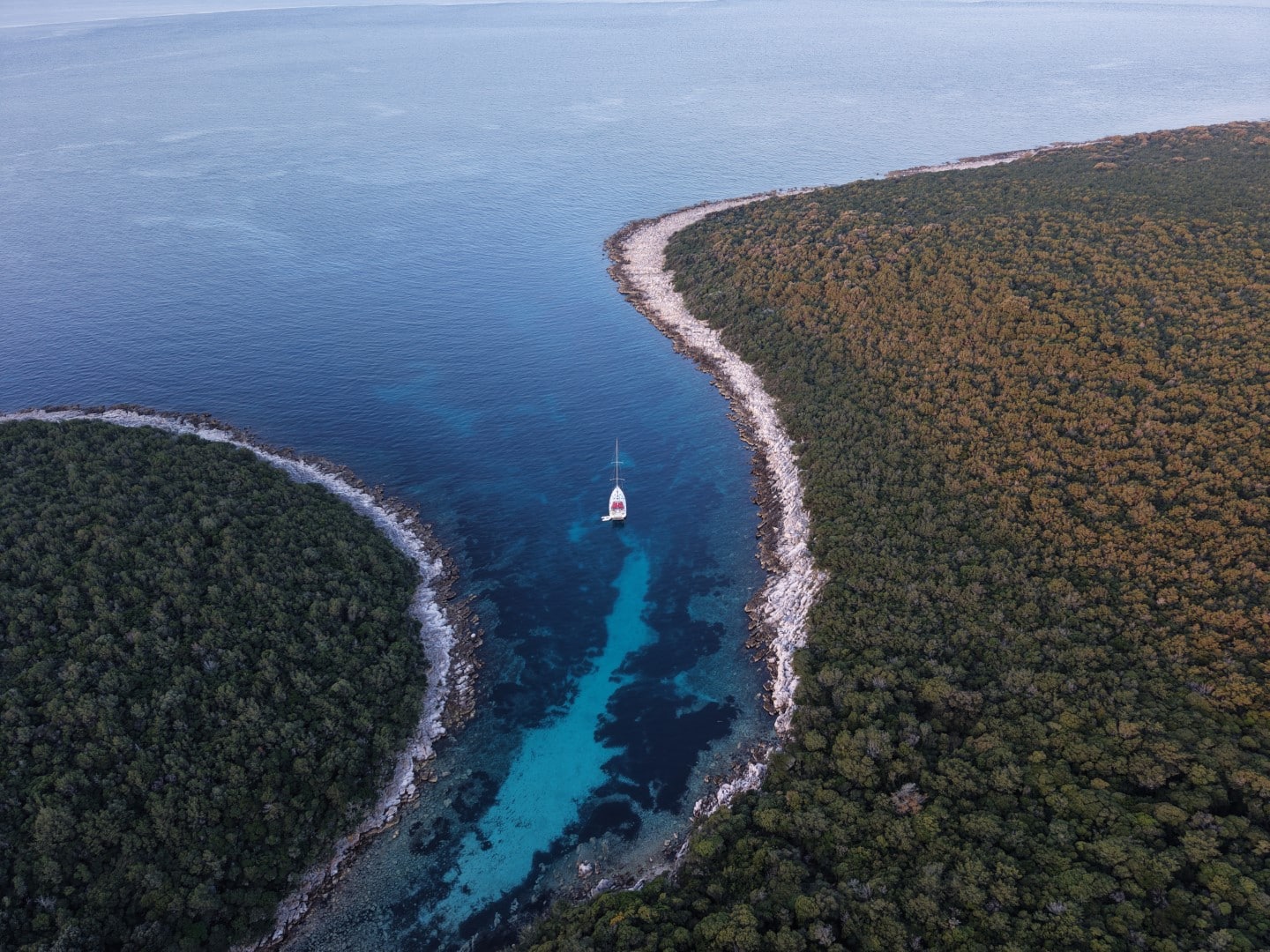
Lojišće Bay on Škarda is a textbook example of a low-pressure anchorage. Clear water, minimal development, and straightforward anchoring conditions. Depths allow for controlled anchoring without excessive chain, and in stable weather the bay feels completely detached from the rest of the region.
The key difference compared to Unije is traffic. Even in summer, Škarda sees significantly fewer boats. In pre-season, it can feel completely empty.
Day 3: Ist, Olib, Silba and Veli Lošinj
This day focuses on shorter hops and exploration.
A quick sail to island Ist allows for a stop in Mljake Bay, ideal for drone filming and a short break. From there, Olib offers another interesting stop, especially in Južna Slatina Bay.
Olib stands out historically. It was inhabited since Roman times and later became part of the Venetian Republic. The island saw population growth in the 15th century as refugees arrived fleeing Ottoman expansion. The defensive tower in the village still reflects that turbulent period. Today, around 700 residents maintain a quiet island lifestyle.
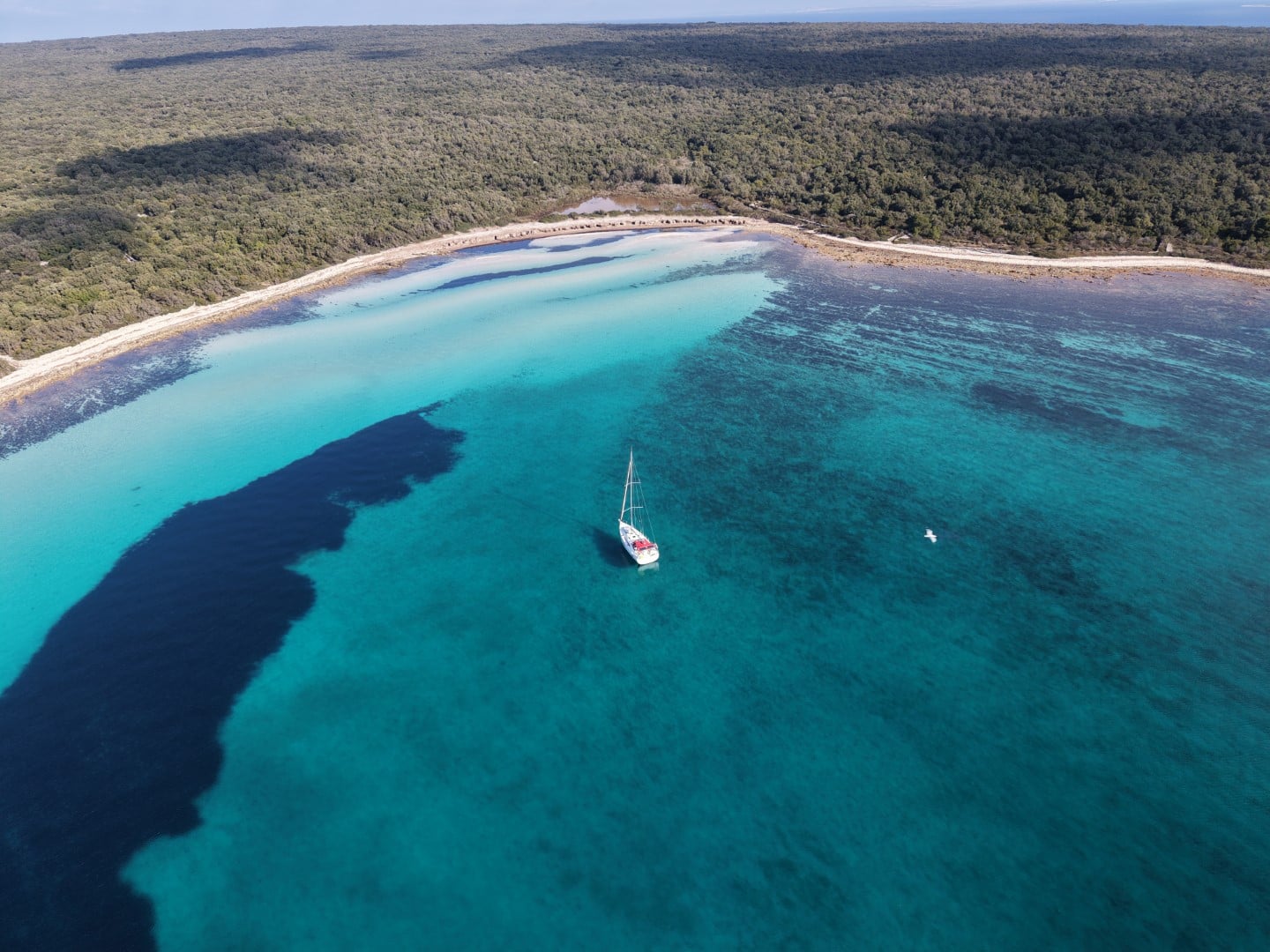

Continuing to Silba, the difference is immediately noticeable. No cars, no hotels, and a strong emphasis on preserving the natural environment. Pernestica Bay is perfect for a peaceful swim or lunch stop, with sandy seabed and protection from southern winds.
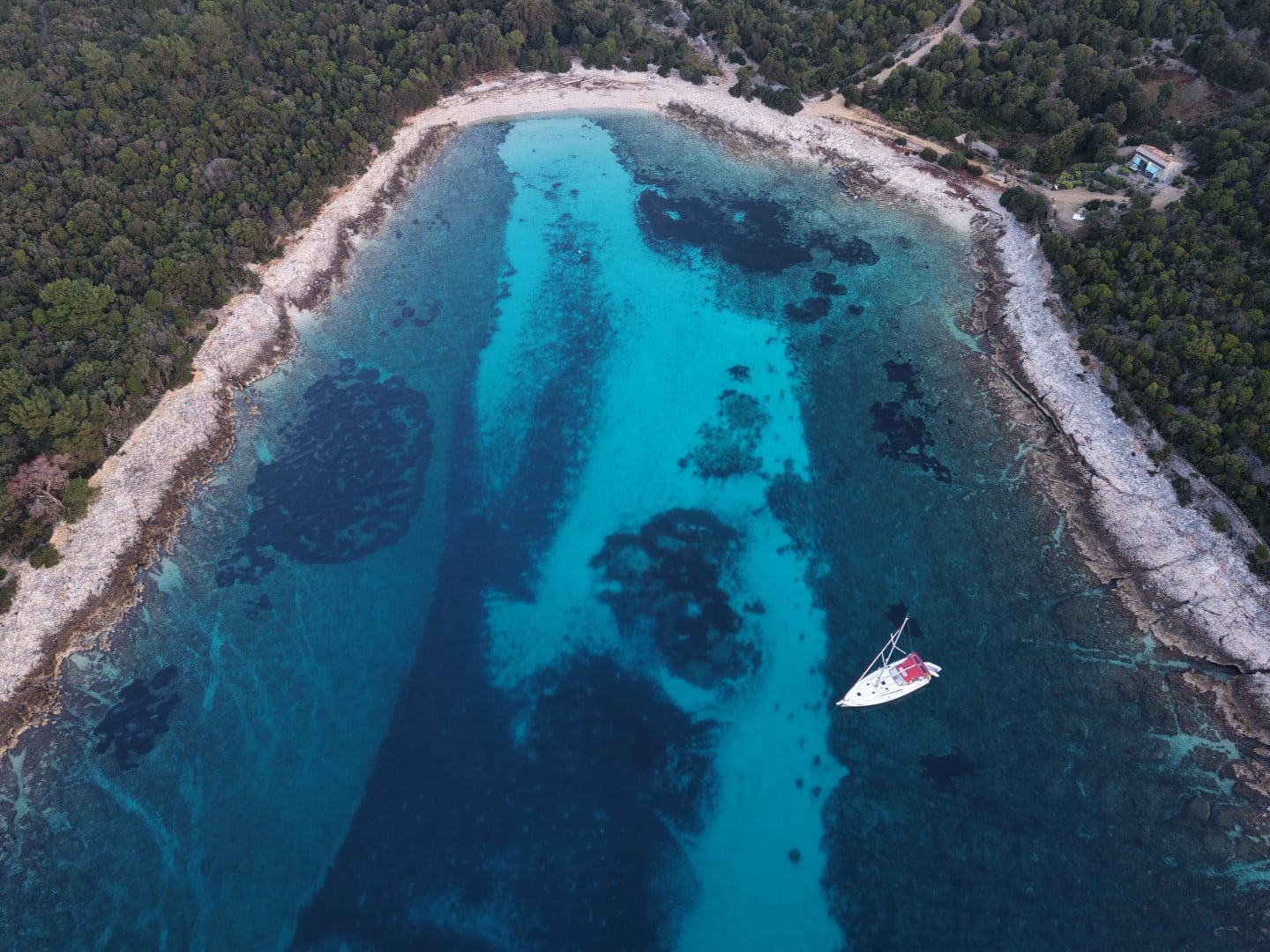
The day ends in Plijeska Bay on Lošinj. It is a calm anchorage with good holding at 6 to 9 meters. While it can be busy in summer, in pre-season it offers a peaceful overnight stay. Protection is best from northern and northeastern winds.
Day 4: Ilovik and return to Lošinj Area
Ilovik is often approached as a simple stop, but the channel between Ilovik and Sv. Petar requires attention. Currents can build depending on conditions, and manoeuvring between moored boats demands precision.

Mooring buoys operate on a first-come basis. In pre-season, availability is high. In summer, timing becomes critical, and late arrivals often need to anchor closer to Sv. Petar.
The value of Ilovik is not complexity but contrast. After several remote anchorages, it offers a small but active settlement with visible local life.
After a technical stop in Mali Lošinj for refuelling, the route continues to Zabodarska Bay. This anchorage is known for its natural beauty and relatively low traffic. The seabed is mixed, so careful anchoring is advised, and attention should be paid to boat traffic entering and leaving Lošinj.
Day 5: Island Susak and return to Pomer
The final day begins with a short sail to Susak, one of the most distinctive islands in the northern Adriatic.

Unlike rocky Croatian islands, Susak is composed mainly of sand, giving it a unique stepped appearance with terraced vineyards. Its lighthouse stands 100 meters above sea level and serves as an important navigational point in the region.
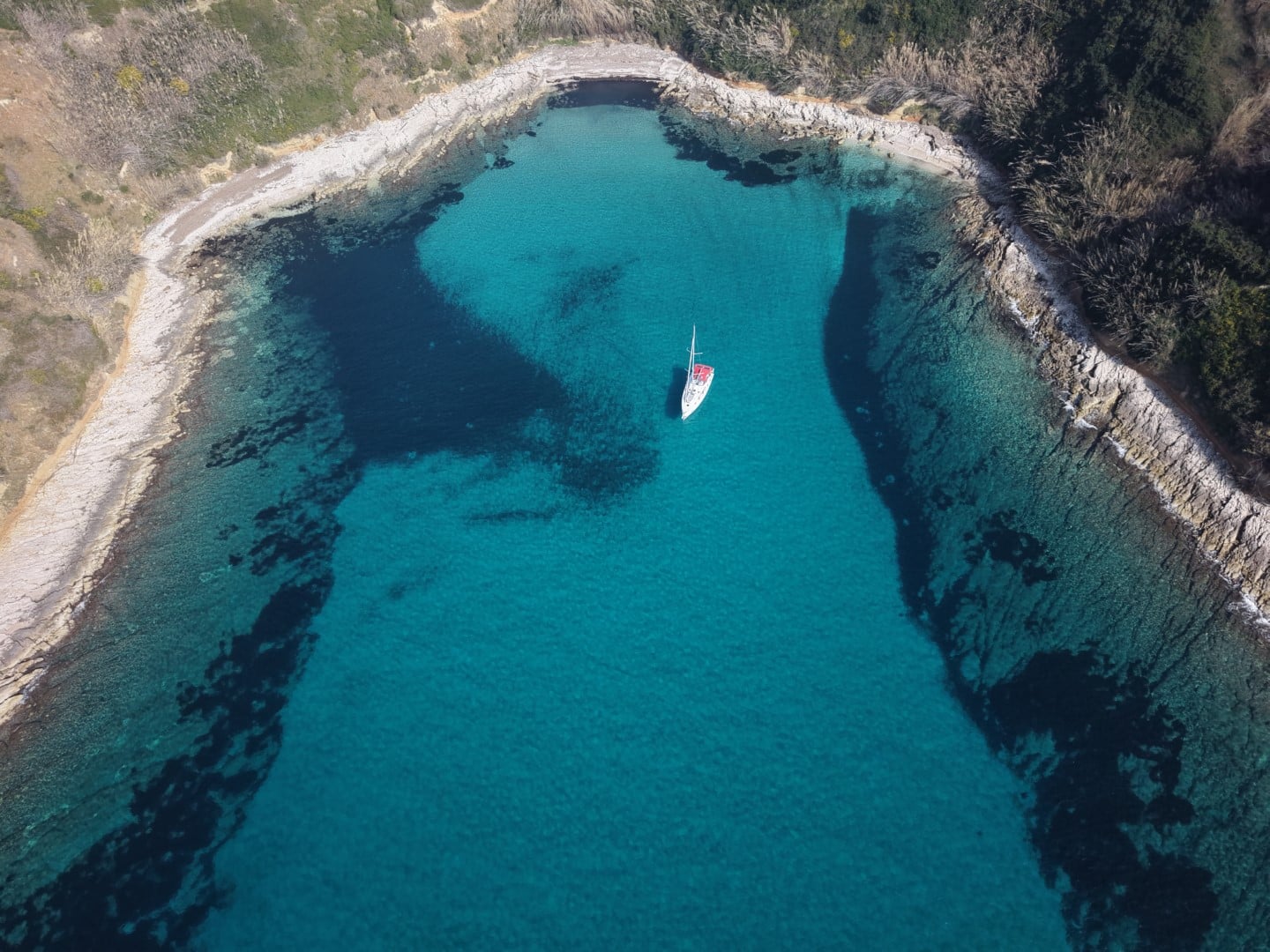
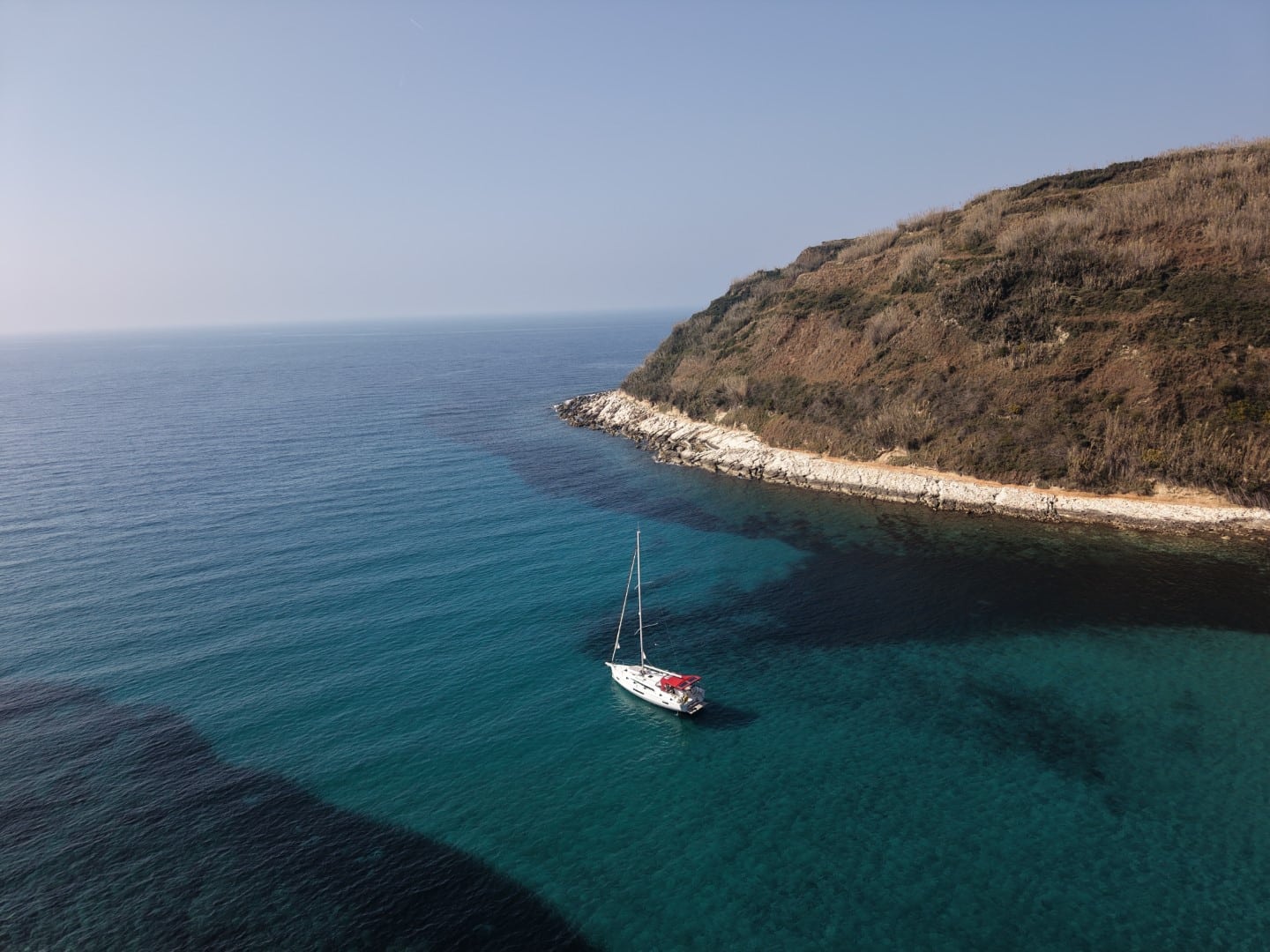
Porat Bay on the western side offers good anchoring in sandy bottom at around 3 meters depth. It provides shelter from winds between north and southeast but is exposed to western conditions. From Susak, the route returns to Pomer with a 25 NM passage, completing a loop that highlights the diversity of northern Croatia sailing.
Northern Croatia sailing conditions
Understanding local wind patterns is critical for this route.
- Bura (NE) can accelerate suddenly, especially around island channels. Anchorages with northern protection become priority in these conditions.
- Jugo (SE) builds longer waves and reduces comfort in otherwise protected bays like those on Unije’s eastern coast.
- Maestral (NW) provides stable sailing conditions but increases daytime traffic in exposed bays during summer.
In pre-season, variability is higher, but so is flexibility. You are not competing for space, which allows better decision-making.
FAQ about northern Croatia sailing
What is the best time for sailing in Istria and the northern Adriatic?
The best time depends on your priorities. From April to June and September to October, conditions are ideal for those who prefer fewer crowds, easier access to anchorages, and more authentic island experiences. July and August offer warmer sea temperatures and a livelier atmosphere, but significantly more traffic in popular bays and marinas.
Is this northern Adriatic sailing route suitable for beginners?
This route is suitable for sailors with basic experience and good passage planning skills. Distances between islands are moderate, and many bays offer good holding. However, awareness of local winds such as bura and jugo is essential. Less experienced crews may benefit from hiring a skipper.
How are anchoring conditions in Kvarner and Northern Adriatic area?
Anchoring conditions are generally very good. Many bays, such as Maračol on Unije or Lojišće on Škarda, have sandy seabeds with reliable holding in depths between 3 and 10 meters. In some locations, mooring buoys are available and managed locally.
Are there enough places to refuel and provision?
Yes. Key locations like Mali Lošinj provide full services, including fuel stations, supermarkets, and marine supplies. It is recommended to plan refuelling stops in advance, especially outside peak season when opening hours may vary.
What makes sailing in the northern Adriatic different from southern Croatia?
Sailing in Istria and the Kvarner region feels more remote and less commercialized. Islands are closer together, distances are manageable, and there is a stronger focus on nature and quiet anchorages. Compared to areas like Split or Dubrovnik, there are fewer crowded hotspots and more opportunities for peaceful sailing.
Can I find quiet bays even in high season?
Yes, but it requires good timing and local knowledge. Bays like Vognišća on Unije or Lojišće on Škarda remain less crowded than mainstream destinations. Arriving early in the day or sailing slightly off the typical routes increases your chances of finding space.
Is Pomer a good starting point for a sailing route in northern Adriatic?
Pomer is an excellent starting base. Located in a well-protected bay near Pula, it offers quick access to the Kvarner islands and avoids some of the busier departure points. This makes it ideal for both relaxed cruising and efficient route planning.
